Radiator Size Gaming: Choosing Radiator Size for Gaming PCs
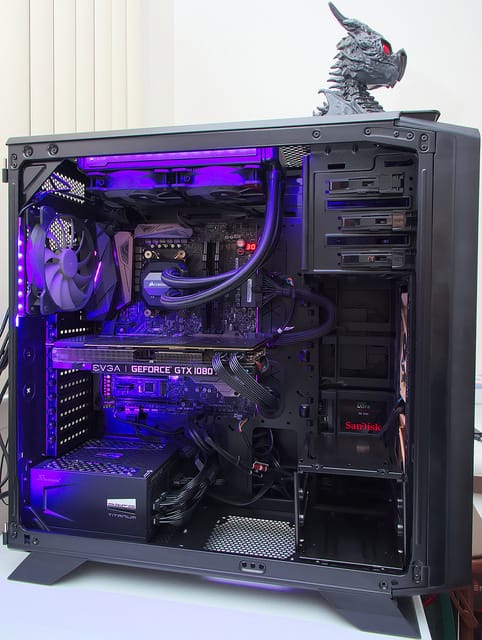
Ever wondered why some gaming rigs purr like kittens even under intense graphical loads, while others sound like a jet engine about to take off? A crucial, often overlooked, component is the humble radiator, silently toiling away to keep your precious processor and graphics card from melting into silicon puddles. Getting the radiator size right can be the difference between smooth, immersive gameplay and frustrating performance hiccups.
Building a high-performance gaming PC can be exciting, but the cooling aspect can quickly become a source of frustration. The fear of overheating, the complexity of liquid cooling loops, and the sheer volume of options available can be overwhelming. Many gamers find themselves struggling to balance performance, noise levels, and budget when selecting the right radiator for their setup.
This guide aims to demystify the process of choosing the right radiator size for your gaming PC, ensuring optimal cooling performance, minimal noise, and a smooth, enjoyable gaming experience.
Choosing the correct radiator size is critical for a quiet and high-performing gaming PC. Factors like case size, CPU/GPU TDP, and desired overclocking headroom influence the optimal radiator dimensions. By understanding these factors and considering your specific needs, you can select a radiator that effectively cools your components, prevents thermal throttling, and keeps noise levels manageable. Let's dive in and explore how to select the perfect radiator for your rig.
Understanding Radiator Size and Its Impact
Understanding Radiator Size and Its Impact is all about diving deep into how the physical dimensions of a radiator affect your gaming PC's cooling performance. When I first started building PCs, I thought bigger was always better when it came to radiators. I crammed a massive 360mm radiator into a mid-tower case, only to find that my airflow was choked, and the cooling performance wasn't as great as I'd hoped. It turns out, radiator size is just one piece of the puzzle. The surface area, fin density, and fan configuration all play crucial roles. A larger radiatorcandissipate more heat, but only if it's paired with adequate airflow. If your fans are struggling to push air through a dense radiator, you're not going to see the benefits. Think of it like this: a bigger radiator is like a bigger engine in a car; it has the potential for more power, but it needs the right fuel and airflow (like proper ventilation) to actually deliver that performance. Radiator size directly affects how efficiently your system can transfer heat away from the CPU and GPU. A larger radiator offers a greater surface area for heat dissipation, which can lead to lower temperatures and higher overclocking potential. However, it's important to consider the physical limitations of your case and the overall airflow within your system. Balancing radiator size with fan performance and case design is essential for optimal cooling.
Factors to Consider When Choosing Radiator Size
Factors to Consider When Choosing Radiator Size encompasses the various elements that influence your decision beyond just "bigger is better." This includes your case size, the thermal design power (TDP) of your CPU and GPU, and your overclocking aspirations. What exactlyisthe thermal design power of your components? TDP is essentially the maximum amount of heat your processor or graphics card is expected to generate under normal operating conditions. The higher the TDP, the more cooling you'll need. A CPU with a TDP of 95W will require less cooling than a CPU with a TDP of 150W. Then there's case size. A compact mini-ITX case will severely limit your radiator options compared to a spacious full-tower case. You'll need to make sure the radiator you choose physically fits inside your case and doesn't interfere with other components. Overclocking, that quest for extra performance by pushing your hardware beyond its default settings, introduces a whole new level of heat. If you plan to overclock your CPU or GPU, you'll need a significantly more robust cooling solution. A larger radiator with high-performance fans will be essential to keep temperatures under control and prevent thermal throttling, which is when your components reduce their clock speeds to avoid overheating.
The History and Myths of Radiator Size in Gaming PCs
The History and Myths of Radiator Size in Gaming PCs explores the evolution of cooling solutions and debunking common misconceptions. The early days of PC gaming saw limited cooling options. Air coolers were the norm, and liquid cooling was a niche pursuit for enthusiasts. Radiators were small and inefficient, often cobbled together from repurposed car parts. As processors and graphics cards became more powerful, the demand for better cooling grew. Dedicated liquid cooling systems started to appear, with radiators designed specifically for PCs. These early systems were often bulky and complex, but they offered a significant improvement in cooling performance compared to air coolers. Over time, liquid cooling technology has become more refined and accessible. All-in-one (AIO) liquid coolers have simplified the installation process, making liquid cooling a viable option for a wider range of gamers. But with this accessibility, some myths have also arisen. One common myth is that all liquid coolers are inherently better than air coolers. While liquid coolers can often provide superior cooling performance, they're not always the best choice. A high-end air cooler can sometimes outperform a low-end AIO liquid cooler, especially in smaller cases with limited airflow. Another myth is that a larger radiator always equals better performance. As we discussed earlier, radiator size is only one factor. A poorly designed or poorly ventilated large radiator can actually perform worse than a smaller, more efficient radiator with good airflow. Understanding the history of PC cooling and debunking these myths can help you make informed decisions when choosing the right radiator for your gaming PC.
Hidden Secrets of Radiator Size for Gaming PCs
Hidden Secrets of Radiator Size for Gaming PCs uncovers the subtle nuances that can significantly impact cooling performance. One "secret" lies in understanding fin density. Fin density refers to the number of fins per inch (FPI) on a radiator. A higher fin density radiator has more surface area for heat dissipation but requires more powerful fans to push air through it effectively. A lower fin density radiator has less surface area but offers less resistance to airflow, making it suitable for quieter, less powerful fans. The ideal fin density depends on your fan setup and desired noise levels. If you're using high-speed, high-static pressure fans, a higher fin density radiator can provide excellent cooling performance. However, if you prefer quieter fans, a lower fin density radiator will be a better choice. Another hidden secret is the importance of pump speed. In an AIO liquid cooler, the pump circulates the coolant through the system. A faster pump speed can improve cooling performance by increasing the flow rate of the coolant. However, a faster pump speed can also generate more noise. Most AIO coolers allow you to adjust the pump speed to find the right balance between cooling performance and noise levels. Finally, remember thermal paste. Applying the correct amount of high-quality thermal paste between your CPU/GPU and the cooler's contact plate is crucial for efficient heat transfer. Too much or too little thermal paste can negatively impact cooling performance.
Recommendations for Radiator Size Based on Your Needs
Recommendations for Radiator Size Based on Your Needs provides practical guidance for different gaming PC configurations. For a budget-friendly gaming PC with a mid-range CPU and GPU and no overclocking, a 120mm or 240mm AIO liquid cooler will likely be sufficient. These coolers offer a good balance of performance, price, and ease of installation. For a high-end gaming PC with a powerful CPU and GPU and moderate overclocking, a 280mm or 360mm AIO liquid cooler is recommended. These larger coolers provide significantly better cooling performance, allowing you to push your components further without worrying about overheating. For an extreme gaming PC with a top-of-the-line CPU and GPU and aggressive overclocking, a custom liquid cooling loop with a large radiator (360mm or larger) is often the best choice. Custom loops offer the most flexibility and control over cooling performance, allowing you to optimize the system for your specific needs. It's also important to consider the physical limitations of your case. If you're building a mini-ITX PC, you'll be limited to smaller radiators. In this case, it's important to choose a high-quality radiator with good fin density and pair it with powerful fans. If you have a larger case, you have more options. A larger radiator will generally provide better cooling performance, but make sure it fits comfortably inside your case and doesn't interfere with other components.
Balancing Performance and Noise
Balancing Performance and Noise is a critical consideration for any gaming PC build. A powerful cooling solution is essential for keeping your components running smoothly, but it's equally important to minimize noise levels. There are several factors that influence the noise generated by your cooling system, including fan speed, pump speed, and radiator design. High-speed fans can provide excellent cooling performance, but they can also be very noisy. If you prefer a quieter system, consider using slower, larger fans. Larger fans can move more air at lower speeds, reducing noise levels without sacrificing cooling performance. Pump speed can also contribute to noise. Some AIO liquid coolers have pumps that operate at a fixed speed, while others allow you to adjust the pump speed. Lowering the pump speed can reduce noise, but it can also slightly reduce cooling performance. Experiment with different pump speeds to find the right balance for your system. The design of the radiator itself can also affect noise levels. Radiators with high fin density can generate more noise as air passes through them. If you're concerned about noise, consider choosing a radiator with a lower fin density. You can also use fan controllers to adjust the speed of your fans based on the temperature of your components. This allows you to keep the fans running at low speeds when the system is idle and increase the fan speeds only when necessary.
Tips for Optimizing Radiator Performance
Tips for Optimizing Radiator Performance focuses on maximizing the efficiency of your chosen cooling solution. Proper fan placement is crucial. Ideally, you want to configure your fans to create a consistent airflow pattern through your case. This usually means mounting intake fans at the front of the case and exhaust fans at the rear and top. Make sure the fans are oriented correctly, so they're pushing air in the right direction. Another often overlooked tip is cable management. Messy cables can obstruct airflow and reduce the efficiency of your radiator. Take the time to route your cables neatly and securely to ensure optimal airflow throughout your case. Clean your radiator regularly. Dust can accumulate on the fins of the radiator, reducing its ability to dissipate heat. Use a can of compressed air to clean the radiator fins every few months. Consider using push-pull fan configuration. If you have enough space, you can mount fans on both sides of the radiator in a push-pull configuration. This can improve airflow and cooling performance, especially with high fin density radiators. Finally, experiment with different fan speeds. Most motherboards and fan controllers allow you to adjust the fan speeds based on the temperature of your components. Experiment with different fan curves to find the optimal balance between cooling performance and noise levels.
Selecting the Right Fans for Your Radiator
Selecting the Right Fans for Your Radiator is paramount for achieving optimal cooling. The fans you choose play a significant role in the overall performance of your liquid cooling system. Factors like fan size, static pressure, and airflow should be carefully considered. Fan size affects the amount of air that can be moved. Larger fans can move more air at lower speeds, which can reduce noise levels. However, larger fans may not fit in all cases. Static pressure is the amount of pressure a fan can generate to push air through a radiator. High static pressure fans are better at overcoming the resistance of the radiator fins, which is especially important for radiators with high fin density. Airflow is the amount of air a fan can move per unit of time, typically measured in cubic feet per minute (CFM). High airflow fans are good for general case ventilation, but they may not be the best choice for radiators with high fin density. When choosing fans for your radiator, look for fans that are specifically designed for use with radiators. These fans typically have high static pressure and a good balance of airflow and noise levels. You should also consider the noise level of the fans. Some fans are designed to be very quiet, while others are designed for maximum performance and may be louder. Choose fans that fit your needs and preferences. Finally, make sure the fans are compatible with your motherboard or fan controller. Some fans use PWM (pulse width modulation) control, which allows you to adjust the fan speed based on the temperature of your components. Other fans use voltage control, which is a simpler but less precise method of controlling fan speed.
Fun Facts About Radiator Technology
Fun Facts About Radiator Technology often surprise people unfamiliar with the intricate details. Did you know that the basic principles of radiator technology have been around for over a century? Early radiators were used in steam engines and other industrial applications. Radiator technology has come a long way since then, but the basic principles remain the same: transfer heat from one medium to another. Another fun fact is that liquid cooling isn't just for PCs. It's also used in cars, motorcycles, and even some high-performance electronics. In fact, some of the same companies that make liquid coolers for PCs also make liquid coolers for other applications. The liquid used in liquid cooling systems is usually a mixture of water and antifreeze. The antifreeze helps to prevent the liquid from freezing in cold temperatures and also helps to prevent corrosion. Some liquid cooling systems use special additives to improve the thermal conductivity of the liquid. Radiators come in a variety of sizes and shapes. The size of the radiator is usually determined by the amount of heat that needs to be dissipated. The shape of the radiator is usually determined by the space available in the case. Some radiators have fins that are designed to maximize the surface area for heat dissipation. Others have channels that are designed to improve the flow of liquid through the radiator. The materials used to make radiators can also vary. Aluminum is a common material because it is lightweight and has good thermal conductivity. Copper is another popular material because it has even better thermal conductivity, but it is more expensive and heavier.
How to Install a Radiator in Your Gaming PC
How to Install a Radiator in Your Gaming PC covers the practical steps to integrate this cooling solution. First and foremost, safety first! Always power down and unplug your PC before working on any internal components. Static electricity can damage sensitive electronics, so ground yourself by touching a metal part of the case before you begin. Next, consult your case manual to identify the radiator mounting locations. Most cases support radiators at the front, top, or rear. Choose a location that provides good airflow and doesn't interfere with other components. Once you've identified the mounting location, install the fans onto the radiator. Make sure the fans are oriented correctly to push or pull air through the radiator. Attach the radiator to the case using screws. Be careful not to overtighten the screws, as this could damage the radiator or the case. If you're installing an AIO liquid cooler, connect the pump/block to your CPU. Apply a thin, even layer of thermal paste to the CPU before attaching the block. Connect the pump power cable to the motherboard. If you're installing a custom liquid cooling loop, you'll need to connect the radiator to the loop using tubing and fittings. Make sure the connections are secure and leak-proof. Fill the loop with coolant and check for leaks. Once you're satisfied that there are no leaks, power on your PC and monitor the temperatures of your CPU and GPU. Adjust the fan speeds and pump speed as needed to optimize cooling performance and noise levels.
What If You Choose the Wrong Radiator Size?
What If You Choose the Wrong Radiator Size? Exploring the potential consequences. Choosing a radiator that's too small can lead to several problems. The most obvious is overheating. If the radiator can't dissipate enough heat, your CPU or GPU will overheat, causing thermal throttling, reduced performance, and potentially even permanent damage. A radiator that's too small may also result in higher noise levels. To compensate for the lack of cooling capacity, the fans will need to run at higher speeds, generating more noise. On the other hand, choosing a radiator that's too large isn't necessarily a bad thing, but it can be wasteful. A larger radiator will generally provide better cooling performance, but it may not be necessary if your components aren't generating a lot of heat. A radiator that's too large may also be more expensive and take up more space in your case. You could also run into space issues. Overly large radiators might not fit in your case or may interfere with other components. Also, consider diminished returns. After a certain point, adding more radiator surface area will have a smaller and smaller impact on cooling performance. It's important to find the right balance between radiator size, cooling performance, noise levels, and cost.
Listicle: Top 5 Radiator Mistakes to Avoid
Listicle: Top 5 Radiator Mistakes to Avoid aims to highlight common pitfalls when selecting and installing radiators.
- Neglecting Case Compatibility: This is a big one! Always, always check the radiator's dimensions against your case's specifications. Don't assume it will fit. Measure twice, buy once.
- Ignoring TDP Ratings: As mentioned earlier, TDP (Thermal Design Power) is crucial. Don't pair a low-end radiator with a high-TDP CPU and expect miracles. Match the cooling solution to the heat output of your components.
- Skimping on Fans: A radiator is only as good as its fans. Cheap, weak fans will choke the airflow and negate the benefits of a high-quality radiator. Invest in fans with good static pressure and a decent CFM rating.
- Poor Cable Management: This might seem trivial, but it's not. Cluttered cables restrict airflow, hindering the radiator's ability to dissipate heat. Take the time to route your cables neatly.
- Forgetting Maintenance: Radiators, especially those with exposed fins, collect dust over time. This dust acts as an insulator, reducing cooling efficiency. Clean your radiator regularly with compressed air.
Question and Answer:
Q: What size radiator should I get for my RTX 3080?
A: For an RTX 3080, a 240mm or 280mm radiator is generally recommended. If you plan to overclock or live in a hot climate, a 360mm radiator might be a better choice.
Q: Is it better to mount a radiator at the top or front of my case?
A: The best mounting location depends on your case and cooling goals. Top mounting can exhaust heat effectively, but it may draw in warmer air from inside the case. Front mounting can bring in cooler air, but it may slightly increase the temperature of other components. Experiment to see what works best for your setup.
Q: How often should I clean my radiator?
A: You should clean your radiator every few months, or more often if you live in a dusty environment. Use a can of compressed air to remove dust from the fins.
Q: Can I use distilled water in my custom liquid cooling loop?
A: While distilled water is a good base, it's essential to add corrosion inhibitors and biocides to prevent algae growth and corrosion. Pre-mixed coolants are a convenient option.
Conclusion of Radiator Size Gaming: Choosing Radiator Size for Gaming PCs
Choosing the right radiator size for your gaming PC is a balancing act, but with a little research and planning, you can create a cooling system that keeps your components running smoothly, quietly, and efficiently. Consider your case size, TDP, overclocking goals, and budget to find the perfect radiator for your needs. Remember to optimize airflow, maintain your cooling system, and choose quality fans. A well-cooled gaming PC is a happy gaming PC!
Post a Comment