PCIe 5.0 SSD Worth It: Gaming Performance vs Cost Analysis
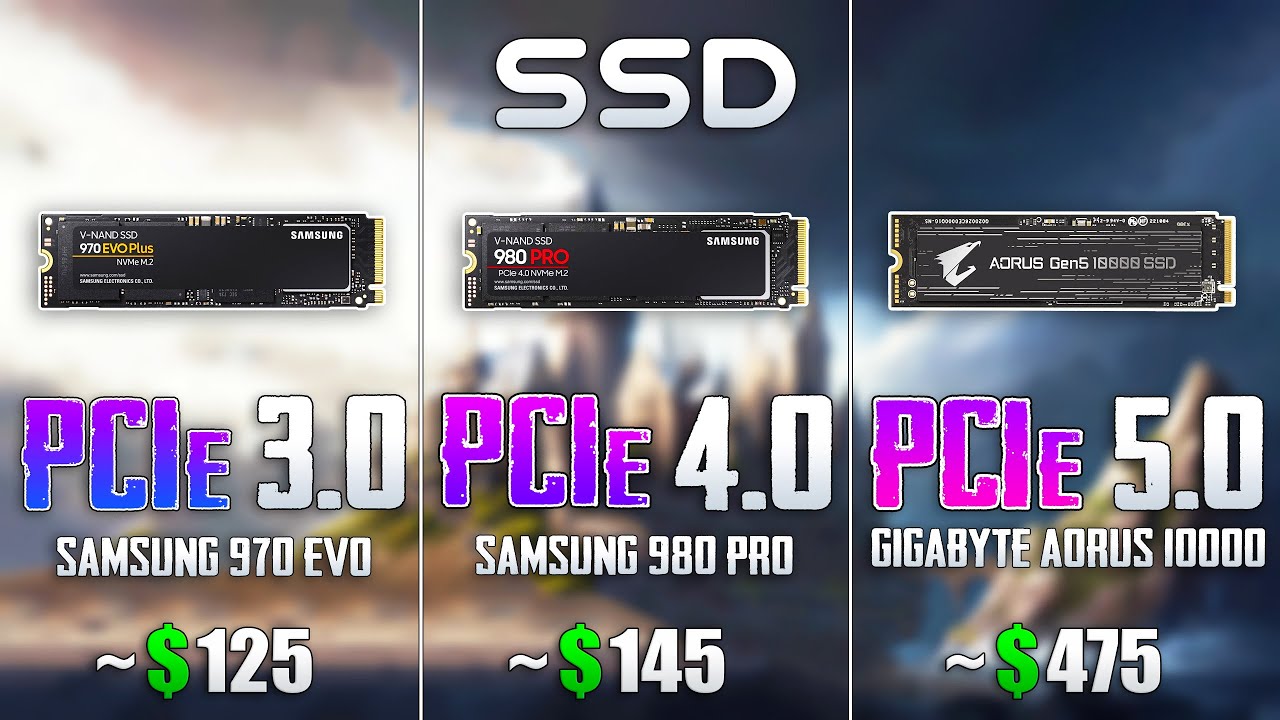
So, you're eyeing that shiny new PCIe 5.0 SSD, huh? Promises of lightning-fast load times and unparalleled gaming performance are dancing in your head. But before you smash that "buy" button, let's pump the brakes for a second. Are those blazing speedsreallyworth the hefty price tag, especially when it comes to gaming?
Gamers today face a tough decision. They crave that edge, that competitive advantage that comes with the latest and greatest hardware. The siren song of PCIe 5.0 SSDs, with their theoretical speeds far exceeding current PCIe
4.0 drives, is undeniably alluring. However, the cost can be a significant barrier, and the real-world performance gains in gaming might not always justify the expense. Navigating this landscape requires careful consideration.
This article aims to dissect the value proposition of PCIe 5.0 SSDs for gaming. We'll delve into the performance differences compared to older standards, analyze the impact on game loading times and overall gameplay, and, most importantly, weigh those benefits against the cost. Ultimately, we'll help you decide whether a PCIe
5.0 SSD is a worthwhile investment for your gaming rig.
In summary, the decision of whether a PCIe 5.0 SSD is "worth it" for gaming boils down to a careful evaluation of your budget, your performance expectations, and the specific games you play. While the theoretical speeds are impressive, the real-world gains in gaming are often marginal compared to the significant cost increase. We’ll be diving into the performance differences, cost analysis, gaming load times, and overall gameplay impact to help you make an informed decision.
Performance Benchmarks and Real-World Gaming
The primary target of this section is to show the real performance benchmarks of PCIe 5.0 SSDs in gaming scenarios, contrasting them with PCIe
4.0 and even older storage solutions. This involves presenting data on game loading times, level streaming speeds, and overall responsiveness, giving readers a clear picture of the actual performance improvements they can expect. The key is to showcase real-world testing rather than just theoretical maximum speeds.
I remember the first time I upgraded from a traditional hard drive to an SSD. The difference was night and day! Games loaded in a fraction of the time, and the overall system felt snappier. It was a revelation. So, when PCIe 5.0 SSDs started hitting the market, promising evengreaterspeeds, my first thought was, "Sign me up!" But then I started digging into the actual benchmarks, particularly those focused on gaming. And that's where things got a little more complicated.
While PCIe 5.0 SSDs undoubtedly boast impressive sequential read and write speeds – numbers that absolutely dwarf those of their PCIe
4.0 predecessors – the actual impact on gaming isn't always as dramatic as you might expect. Many games aren't optimized to fully utilize those speeds. The bottleneck often lies elsewhere, such as the CPU or GPU. Yes, you'll see faster loading times, but the difference between, say, a 5-second load time and a 7-second load time might not be worth the extra hundreds of dollars.
That said, there are certain games and scenarios where PCIe 5.0 SSDs can make a more noticeable difference. Games with massive open worlds and constant streaming of assets can benefit from the faster speeds. However, even in these cases, the performance gains are often incremental rather than transformative. It's a matter of diminishing returns. The question becomes: how much are you willing to pay for a few extra seconds shaved off load times? The answer will vary from gamer to gamer, but it's a crucial consideration before making the leap to PCIe
5.0.
Cost Analysis: Breaking Down the Price Per Performance
The target here is to provide a detailed cost breakdown of PCIe 5.0 SSDs compared to PCIe
4.0 and older drives. This involves not just the initial purchase price but also factors like power consumption and the need for potentially more expensive cooling solutions. The section will also explore the cost per gigabyte and cost per frame gained, offering a more nuanced perspective on the value proposition.
Let's talk money. Because at the end of the day, that's what this decision really boils down to. PCIe 5.0 SSDs aren't cheap. They're premium products with premium price tags. And that price premium needs to be justified by the performance gains you're actually getting.
When you compare the cost per gigabyte of a PCIe 5.0 SSD to a PCIe
4.0 SSD, the difference is significant. You're paying a lot more for that extra speed. Now, if money is no object, then by all means, go for the fastest drive available. But for most gamers, budget is a key consideration. And if you're on a tight budget, that extra money might be better spent on upgrading your GPU or CPU, which will likely have a much more noticeable impact on your overall gaming experience.
Furthermore, don't forget to factor in the cost of cooling. PCIe 5.0 SSDs generate more heat than their predecessors, so you might need to invest in a better heatsink or even active cooling to prevent thermal throttling. That's another added expense that needs to be factored into the equation. So, before you click that "buy" button, do your homework, compare prices, and consider where your money is best spent to maximize your gaming performance.
The Myth of Instantaneous Loading Times
This section aims to debunk the common misconception that PCIe 5.0 SSDs will eliminate loading times altogether. It will explain the various factors that contribute to loading times, including CPU processing, game engine optimization, and network latency in online games. The goal is to set realistic expectations and highlight that even the fastest SSD can't overcome other bottlenecks.
There's a pervasive myth surrounding SSDs, especially the super-fast ones like PCIe 5.0 models, that they'll magically eliminate loading times entirely. You see the marketing materials – "load times are a thing of the past!" – and you start to believe it. But the reality is far more nuanced. Loading times are a complex beast, and even the fastest storage solution can't slay it single-handedly.
Think of it like this: your SSD is like a super-fast courier delivering packages (game data) to your CPU. But if your CPU is overwhelmed with other tasks or the package is poorly organized (inefficient game engine), the delivery will still be delayed. The CPU needs time to process the data, unpack it, and get it ready for the GPU to render. And that processing time can often be the bottleneck, not the storage speed.
Furthermore, in online games, network latency plays a significant role in loading times. You might have the fastest SSD in the world, but if your internet connection is slow or the game server is overloaded, you'll still experience delays. So, while a PCIe 5.0 SSD will certainly improve loading times, it's not a magic bullet. Set realistic expectations and understand that other factors can still influence your overall gaming experience.
Hidden Benefits Beyond Gaming: Workloads and Productivity
The target here is to explore the non-gaming benefits of PCIe 5.0 SSDs, such as faster video editing, quicker software compilation, and improved overall system responsiveness for demanding workloads. This helps broaden the appeal of PCIe
5.0 SSDs beyond just gaming, making them a more attractive option for content creators and professionals.
While we've been primarily focusing on gaming, it's important to remember that PCIe 5.0 SSDs offer benefits beyond just faster load times in your favorite games. If you're a content creator, a video editor, or someone who works with large files on a regular basis, a PCIe
5.0 SSD can be a game-changer in terms of productivity.
Imagine rendering a complex video project in half the time. Or compiling a large software program in a fraction of the time it used to take. These are the kinds of real-world benefits that PCIe 5.0 SSDs can deliver. The faster read and write speeds translate to significant time savings in demanding workloads.
Even for everyday tasks, a PCIe 5.0 SSD can make your system feel more responsive. Opening large documents, transferring files, and multitasking between applications become smoother and more efficient. So, if you're someone who values productivity and works with large files, a PCIe
5.0 SSD might be a worthwhile investment, even if the gaming benefits are less pronounced.
Recommendations: Who Should (and Shouldn't) Buy a PCIe 5.0 SSD?
Target audience for PCIe 5.0 SSDs
This recommendation section is to define the specific target audience for PCIe 5.0 SSDs based on their gaming habits, budget, and other use cases. This involves outlining the types of gamers who would benefit most from the upgrade, as well as those who would be better off sticking with PCIe
4.0 or even older storage solutions. The goal is to provide clear and actionable advice to help readers make the right purchasing decision.
So, who should actually buy a PCIe 5.0 SSD? And who should probably stick with a PCIe
4.0 drive (or even an older standard)? Let's break it down.
If you're a hardcore gamer with a high-end system and money is no object, then a PCIe 5.0 SSD might be a worthwhile splurge. You'll get slightly faster load times and a more responsive overall gaming experience. But be aware that the performance gains might not be as dramatic as you expect, especially in older games.
If you're a content creator or professional who works with large files regularly, a PCIe 5.0 SSD can be a significant productivity booster. The faster read and write speeds will save you time and make your workflow more efficient. However, if you're a casual gamer or on a tight budget, you're probably better off sticking with a PCIe
4.0 SSD. The performance difference in gaming is often minimal, and the money you save can be better spent on other components like a better GPU or CPU.
The Importance of Motherboard Compatibility
This section will focus on the critical aspect of motherboard compatibility. It will explain that PCIe 5.0 SSDs require a motherboard that supports the PCIe
5.0 standard and that older motherboards will not be able to take full advantage of the drive's speeds. The section will also discuss the BIOS updates that may be necessary for proper compatibility and performance.
Before you even think about buying a PCIe 5.0 SSD, make absolutely sure that your motherboard supports it! This might seem obvious, but it's a crucial point that's easily overlooked. PCIe
5.0 SSDs require a motherboard with a PCIe
5.0 slot. Plugging it into an older PCIe
4.0 slot will limit its performance, defeating the whole purpose of buying a cutting-edge drive.
Even if your motherboard has a PCIe 5.0 slot, it's a good idea to check the manufacturer's website for BIOS updates. Sometimes, BIOS updates are necessary to ensure proper compatibility and optimal performance with the latest SSDs. Installing the latest BIOS can unlock the full potential of your PCIe
5.0 SSD and prevent potential compatibility issues.
So, before you make any purchases, double-check your motherboard's specifications and ensure that it supports PCIe 5.0. And don't forget to update your BIOS to the latest version. Taking these precautions will save you a lot of headaches down the road.
Thermal Management: Keeping Your SSD Cool
This part of the article focuses on what needs to be done with thermal management of your SSD. High-performance PCIe 5.0 SSDs generate a significant amount of heat. Without proper cooling, they can overheat and experience thermal throttling, which reduces their performance. This section will discuss the importance of using a heatsink or other cooling solution to keep your SSD cool and prevent performance degradation.
Let's talk about heat, because PCIe 5.0 SSDs can gethot. These blazing-fast drives generate a significant amount of heat, and if you're not careful, that heat can lead to thermal throttling, which basically means your SSD will slow itself down to prevent overheating. And that defeats the whole purpose of buying a fast drive in the first place!
Most PCIe 5.0 SSDs come with a heatsink included, and that's usually sufficient for basic cooling. However, if you're planning on pushing your SSD to its limits, or if you live in a hot climate, you might want to consider a more robust cooling solution. This could involve a larger heatsink, active cooling with a fan, or even a liquid cooling setup.
The key is to monitor your SSD's temperature and make sure it stays within the recommended operating range. Most SSD manufacturers provide temperature monitoring software, or you can use third-party tools. If you see your SSD consistently hitting high temperatures, it's time to invest in better cooling. Otherwise, you're just throwing money away on a fast drive that's being held back by thermal throttling.
Fun Facts: PCIe 5.0 SSDs and the Future of Storage
The target of the Fun Facts section is to give extra knowledge about PCIe 5.0 SSDs and the Future of Storage. This section aims to inject some lighthearted and engaging content into the article by sharing interesting and lesser-known facts about PCIe
5.0 SSDs and the future of storage technology. This could include trivia about the development process, predictions for future advancements, or comparisons to other storage technologies. The goal is to entertain readers while also reinforcing the key concepts of the article.
Did you know that the theoretical maximum bandwidth of PCIe 5.0 is double that of PCIe
4.0? That's like going from a two-lane highway to a four-lane highway for your data! Of course, we're not quite seeing those speeds in real-world applications yet, but the potential is there.
Another fun fact: the development of PCIe 5.0 SSDs was a collaborative effort involving numerous companies and engineers. It's a testament to human ingenuity and the relentless pursuit of faster and more efficient storage solutions. And who knows what the future holds? Maybe PCIe
6.0 or even
7.0 SSDs are just around the corner, promising even more mind-boggling speeds.
It's exciting to think about the possibilities that these advancements in storage technology unlock. From faster game loading times to more efficient data processing, the future of storage is bright. And while PCIe 5.0 SSDs might not be a perfect fit for everyone right now, they're certainly a glimpse into that future.
How to Choose the Right PCIe 5.0 SSD for Your Needs
This section targets helping the reader choose the right PCIe 5.0 SSD for their needs. This section will provide a step-by-step guide on how to select the best PCIe
5.0 SSD based on factors such as capacity, speed, endurance, and warranty. The guide will also offer tips on comparing different models and brands to find the best value for money.
Okay, so you've decided that a PCIe 5.0 SSD is right for you. Great! But with so many different models and brands on the market, how do you choose therightone? Here's a step-by-step guide to help you navigate the options:
First, consider your capacity needs. How much storage space do you actually need? Don't just blindly buy the biggest drive you can afford. Think about the games you play, the files you work with, and the amount of free space you typically use. A 1TB or 2TB drive is often sufficient for most gamers, but if you're a content creator or work with large video files, you might need a larger capacity.
Next, look at the speed specifications. Pay attention to both sequential read and write speeds, as well as random read and write speeds. Sequential speeds are important for transferring large files, while random speeds are more important for general system responsiveness. Finally, consider the endurance and warranty. Endurance refers to the amount of data that can be written to the drive over its lifetime. A longer warranty provides peace of mind and protects you against potential failures.
What If My Games Don't Benefit From PCIe 5.0?
The target of the section is to tackle if your games don't benefit from PCIe 5.0. This section will address the scenario where a gamer invests in a PCIe
5.0 SSD but finds that their favorite games don't show significant performance improvements. It will offer advice on optimizing game settings, upgrading other components, and exploring alternative uses for the SSD, such as using it as a cache drive for frequently accessed files.
So, you've splurged on a PCIe 5.0 SSD, loaded up your favorite games, and...nothing. The loading times are only marginally faster, and the overall gaming experience doesn't feel significantly different. What gives? Don't panic! There are a few things you can try.
First, make sure your games are actually installed on the PCIe 5.0 SSD. This might sound obvious, but it's easily overlooked. If your games are still on your old hard drive, you won't see any performance benefits. Next, try optimizing your game settings. Lowering the graphics settings can reduce the load on your GPU and CPU, which can free up resources for faster loading times. Finally, consider upgrading other components in your system. A faster CPU or GPU can often make a bigger difference than a faster SSD.
If all else fails, don't despair! You can still use your PCIe 5.0 SSD as a cache drive for frequently accessed files. This can improve the overall responsiveness of your system and make everyday tasks feel snappier. And who knows, maybe future games will be better optimized for PCIe
5.0 SSDs, so you'll be ready when they arrive.
Top 5 Reasons to (or Not to) Buy a PCIe 5.0 SSD for Gaming
The target of the Top 5 Reasons section is to explain the top 5 reasons to (or not to) Buy a PCIe 5.0 SSD for Gaming. This section will provide a concise list of the top 5 reasons why a gamer should consider purchasing a PCIe
5.0 SSD, as well as the top 5 reasons why they might want to stick with a PCIe
4.0 drive or even an older storage solution. The list will be presented in a clear and easy-to-understand format, making it easy for readers to weigh the pros and cons and make an informed decision.
Alright, let's cut through the noise and get to the heart of the matter. Here are the top 5 reasons to buy a PCIe 5.0 SSD for gaming:
- Slightly faster load times in some games.
- Improved system responsiveness.
- Future-proofing your system for upcoming games.
- Bragging rights (hey, it counts for some people!).
- Significant productivity boost for content creation tasks.
And here are the top 5 reasonsnotto buy a PCIe 5.0 SSD for gaming:
- High cost compared to PCIe 4.0 drives.
- Minimal performance gains in many games.
- Potential for thermal throttling if not properly cooled.
- Requires a compatible motherboard.
- Better value can often be found by upgrading other components.
Ultimately, the decision is yours. Weigh these pros and cons carefully and choose the option that best fits your needs and budget.
Question and Answer Section
Here are some frequently asked questions about PCIe 5.0 SSDs and gaming:
Q: Will a PCIe 5.0 SSD make my games run faster?
A: Not necessarily. While loading times will likely be faster, the overall impact on framerates and gameplay smoothness may be minimal, especially if your CPU and GPU are already powerful.
Q: Is a PCIe 5.0 SSD worth the extra cost for gaming?
A: It depends on your budget and priorities. If you're a hardcore gamer with a high-end system and money is no object, then it might be a worthwhile splurge. But for most gamers, the extra cost is probably not justified by the performance gains.
Q: Do I need a special motherboard to use a PCIe 5.0 SSD?
A: Yes, you need a motherboard that supports the PCIe 5.0 standard. Older motherboards will not be able to take full advantage of the drive's speeds.
Q: Will PCIe 5.0 SSDs become more affordable in the future?
A: Yes, as the technology matures and production costs decrease, PCIe 5.0 SSDs will likely become more affordable. However, it may take some time before they reach price parity with PCIe
4.0 drives.
Conclusion of PCIe 5.0 SSD Worth It: Gaming Performance vs Cost Analysis
So, is a PCIe 5.0 SSD worth it for gaming? The answer, as you might have gathered, is a resounding "it depends." It depends on your budget, your performance expectations, the games you play, and your overall system configuration. While the theoretical speeds of PCIe
5.0 SSDs are undeniably impressive, the real-world benefits in gaming are often marginal compared to the significant cost increase. For hardcore gamers with deep pockets, a PCIe
5.0 SSD might be a nice-to-have upgrade. But for most gamers, the money is probably better spent on other components, such as a better GPU or CPU. Ultimately, the decision is yours. Weigh the pros and cons carefully and choose the option that best fits your individual needs and priorities.
Post a Comment