Gaming Monitor 1440p 144Hz: Best Displays for High-Refresh Gaming
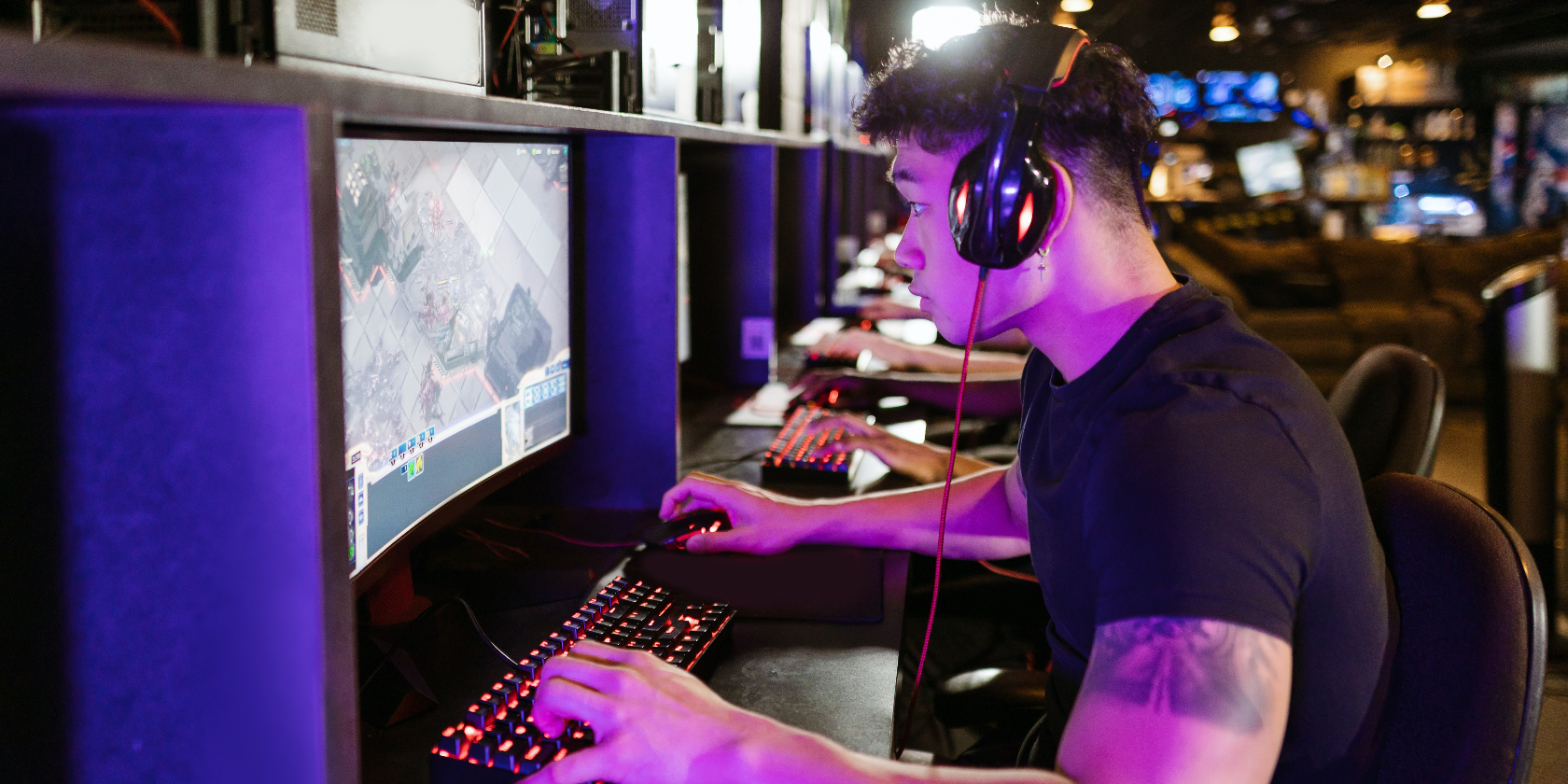
Imagine diving headfirst into your favorite game, the visuals so crisp and fluid, it feels like you're actually there. No more screen tearing, no more choppy movements – just pure, unadulterated gaming bliss. That's the promise of a 1440p 144Hz gaming monitor, and it's a game-changer (pun intended!).
Let's face it: trying to decipher monitor specifications can feel like learning a foreign language. What does 1440preallymean? Is 144Hz just a number thrown around by marketing teams? And what about all those fancy acronyms like G-Sync and Free Sync? The sheer amount of information can be overwhelming, leading to choices that don't actually improve your gaming experience. It can feel like you're spending a lot of money without seeing the tangible benefits you hoped for.
This article is your guide to navigating the world of 1440p 144Hz gaming monitors. We'll break down the jargon, explain why these monitors are so sought after, and help you find the perfect display to elevate your gaming to the next level. We're talking about finding the sweet spot between visual fidelity and smooth performance.
Essentially, we're diving into the realm of high-refresh-rate gaming, specifically focusing on the 1440p resolution and 144Hz refresh rate combination. These monitors offer a significant upgrade for gamers seeking sharper images and smoother gameplay. Key terms to keep in mind include refresh rate, response time, panel types (TN, IPS, VA), adaptive sync technologies (G-Sync and Free Sync), and of course, overall image quality. This isn't just about specs; it's about creating an immersive and enjoyable gaming experience.
Why 1440p Resolution Matters
When I first upgraded to a 1440p monitor, I was blown away. I remember loading up The Witcher 3and just staring at the detail in Geralt's beard (yes, the beard!). Everything was noticeably sharper and more defined than on my old 1080p screen. It felt like I was seeing the game for the first time, even though I'd played it countless hours before. That initial "wow" factor is a big part of why 1440p is so appealing for gamers.
Beyond that initial impression, the increased resolution truly elevates the visual fidelity of your games. You're getting a significantly higher pixel density compared to 1080p, which means more detail and less noticeable pixelation. This is particularly beneficial in games with sprawling environments and intricate textures. Think about the difference between looking at a blurry photograph versus a high-resolution one – that's the kind of jump we're talking about.
For competitive gamers, the sharper image can also provide a slight edge. Being able to clearly distinguish distant enemies or objects can be the difference between victory and defeat. While a higher refresh rate is often prioritized in competitive play, the clarity of 1440p enhances your overall awareness and reaction time. It's a winning combination, provided your PC can handle the increased graphical load.
Understanding 144Hz Refresh Rate
The refresh rate, measured in Hertz (Hz), refers to how many times per second your monitor updates the image on the screen. A 144Hz monitor refreshes the image 144 times per second, compared to a standard 60Hz monitor which only refreshes 60 times per second. This difference is crucial for creating smoother and more responsive gameplay.
Imagine watching a fast-paced action scene on a 60Hz monitor – you might notice some blurring or ghosting as the image struggles to keep up with the rapid movements. On a 144Hz monitor, those movements appear much smoother and clearer, reducing motion blur and allowing you to track targets more easily. This is especially important in fast-paced games like first-person shooters, racing games, and fighting games, where every millisecond counts.
The higher refresh rate also contributes to a more responsive feel. The delay between your input (e.g., moving your mouse or pressing a key) and the action on the screen is reduced, making the game feel more connected and immediate. This can lead to improved accuracy and faster reaction times, giving you a competitive advantage. While it might seem like a subtle difference on paper, the impact on your gaming experience is significant and noticeable.
The Evolution of Gaming Monitors
Gaming monitors haven't always been the sophisticated displays we know today. Back in the day, gamers were stuck with standard CRT (Cathode Ray Tube) monitors, which were bulky, heavy, and had limited refresh rates. While some enthusiasts experimented with overclocking their CRTs to achieve higher refresh rates, it was a risky and unreliable process.
The transition to LCD (Liquid Crystal Display) technology marked a significant turning point. Early LCD monitors had their own set of challenges, including slow response times and noticeable input lag, which made them unsuitable for competitive gaming. However, manufacturers gradually improved the technology, leading to faster response times, higher refresh rates, and better overall image quality.
The introduction of technologies like TN (Twisted Nematic) panels, which prioritized speed and low response times, paved the way for high-refresh-rate gaming. While TN panels often sacrificed color accuracy and viewing angles, their speed made them popular among competitive gamers. Later, IPS (In-Plane Switching) and VA (Vertical Alignment) panels emerged, offering better color accuracy and viewing angles while still maintaining respectable response times. Today, gamers have a wide range of options to choose from, depending on their priorities and budget, making the landscape of gaming monitors more diverse and accessible than ever before.
Unlocking the Hidden Potential
While the 1440p resolution and 144Hz refresh rate are the headline features, there's more to a great gaming monitor than just those numbers. Understanding the nuances of panel technology, response time, and adaptive sync can unlock the true potential of your display.
For example, response time refers to how quickly a pixel can change from one color to another. A lower response time (measured in milliseconds) reduces ghosting and blurring, resulting in a clearer and sharper image, especially during fast-paced action. Adaptive sync technologies like G-Sync (Nvidia) and Free Sync (AMD) synchronize the refresh rate of your monitor with the frame rate of your graphics card, eliminating screen tearing and stuttering, which can be distracting and detrimental to gameplay.
Beyond the technical aspects, consider the ergonomics of the monitor. Adjustable height, tilt, and swivel can help you find the perfect viewing angle and reduce neck strain during long gaming sessions. Also, pay attention to the monitor's connectivity options, ensuring it has the necessary ports for your devices. By considering these factors, you can fine-tune your gaming experience and unlock the hidden potential of your 1440p 144Hz monitor.
Our Top Recommendations
Navigating the vast selection of 1440p 144Hz gaming monitors can be overwhelming, so here are a few of our top recommendations to get you started: For the Competitive Gamer: Look for a monitor with a TN panel, low response time (1ms or less), and G-Sync or Free Sync compatibility. Examples include the ASUS ROG Strix XG27AQ and the Ben Q ZOWIE XL2740. For the Immersive Experience: Opt for an IPS panel with good color accuracy and wide viewing angles. The LG 27GL850-B and the ASUS TUF Gaming VG27AQ are excellent choices.
For the Budget-Conscious Gamer: Consider a VA panel, which offers a good balance of image quality and response time at a more affordable price. The MSI Optix MAG274QRF-QD and the Gigabyte M27Q are worth considering.
Remember to read reviews and compare specifications before making a purchase. The best monitor for you will depend on your individual preferences, gaming habits, and budget. Don't be afraid to do some research and find the display that truly elevates your gaming experience.
Understanding Response Time and Input Lag
Response time and input lag are two distinct but related factors that can significantly impact your gaming experience. Response time, as mentioned earlier, refers to how quickly a pixel can change color, while input lag is the delay between your input (e.g., pressing a key) and the action appearing on the screen.
A high response time can lead to ghosting or blurring, making it difficult to track fast-moving objects. Input lag, on the other hand, can make the game feel unresponsive and sluggish, hindering your ability to react quickly. While a lower response time is generally desirable, it's important to note that manufacturers often use different testing methods, making it difficult to compare response times across different brands and models.
Input lag is influenced by various factors, including the monitor's internal processing, the cable used to connect your computer, and even the refresh rate. While you can't completely eliminate input lag, you can minimize it by using a fast monitor, a high-quality cable, and ensuring that your graphics card is outputting a high frame rate. Understanding the difference between these two factors and how they affect your gaming experience can help you make a more informed decision when choosing a 1440p 144Hz gaming monitor.
Tips for Optimizing Your Gaming Monitor
Once you've invested in a 1440p 144Hz gaming monitor, there are several steps you can take to optimize its performance and ensure you're getting the best possible gaming experience.
First, make sure your graphics card is powerful enough to run your games at 1440p resolution and a high frame rate. If your graphics card is struggling to keep up, you may need to lower your graphics settings or upgrade to a more powerful card.
Next, enable adaptive sync (G-Sync or Free Sync) in your monitor's settings and in your graphics card control panel. This will synchronize the refresh rate of your monitor with the frame rate of your graphics card, eliminating screen tearing and stuttering.
Calibrate your monitor's colors to ensure accurate and vibrant visuals. You can use a hardware calibrator or manually adjust the settings in your monitor's on-screen display (OSD). Experiment with different settings to find what looks best to your eyes. Finally, make sure your monitor is properly positioned and angled to reduce eye strain and neck pain. A comfortable and ergonomic setup will allow you to game for longer periods without discomfort.
Understanding Panel Types: TN vs. IPS vs. VA
The panel type of your gaming monitor significantly impacts its image quality, response time, and viewing angles. The three most common panel types are TN (Twisted Nematic), IPS (In-Plane Switching), and VA (Vertical Alignment).
TN panels are typically the fastest and most affordable, making them popular among competitive gamers. They offer low response times and high refresh rates but often sacrifice color accuracy and viewing angles. IPS panels are known for their excellent color accuracy and wide viewing angles, making them ideal for immersive gaming and content creation. However, they tend to be more expensive than TN panels and may have slightly slower response times.
VA panels offer a compromise between TN and IPS, providing good color accuracy and viewing angles while still maintaining respectable response times. They also tend to have better contrast ratios than TN and IPS panels, resulting in deeper blacks and more vibrant colors. The best panel type for you will depend on your individual priorities and budget. If you prioritize speed and affordability, a TN panel might be the best choice. If you prioritize image quality and viewing angles, an IPS panel would be a better fit. And if you want a balance of both, a VA panel could be the perfect option.
Fun Facts About Gaming Monitors
Did you know that the first gaming monitors were simply standard CRT monitors that were marketed towards gamers? It wasn't until the advent of LCD technology that dedicated gaming monitors with features like high refresh rates and low response times began to emerge.
Another fun fact is that the term "esports" was coined in the late 1990s, coinciding with the rise of competitive gaming and the demand for specialized gaming hardware, including monitors. As esports gained popularity, manufacturers started focusing on developing monitors specifically designed for competitive play, leading to innovations like G-Sync and Free Sync.
The world's most expensive gaming monitor costs tens of thousands of dollars and features cutting-edge technology like OLED panels, curved screens, and ultra-high resolutions. While these monitors are out of reach for most gamers, they represent the pinnacle of gaming display technology. From humble beginnings to high-tech marvels, the evolution of gaming monitors is a testament to the ever-growing popularity and sophistication of the gaming industry.
How to Choose the Right Gaming Monitor
Choosing the right 1440p 144Hz gaming monitor can feel like a daunting task, but by following a few simple steps, you can narrow down your options and find the perfect display for your needs.
First, determine your budget. Gaming monitors can range in price from a few hundred dollars to over a thousand, so it's important to set a budget before you start shopping. Next, consider your gaming habits. Are you a competitive gamer who prioritizes speed and low response times, or do you prefer immersive single-player experiences with vibrant visuals? Your gaming habits will help you determine which panel type and features are most important to you.
Read reviews from reputable sources to get an idea of the monitor's performance and image quality. Pay attention to factors like color accuracy, response time, input lag, and viewing angles. Don't be afraid to compare different models and brands. Once you've narrowed down your options, try to see the monitors in person if possible. This will allow you to assess the image quality and ergonomics for yourself. By following these steps, you can choose a 1440p 144Hz gaming monitor that meets your needs and enhances your gaming experience.
What If My PC Can't Handle 1440p 144Hz?
It's a valid question! Investing in a 1440p 144Hz monitor is a fantastic upgrade, but it's crucial to ensure your PC can actually drive it. If your graphics card isn't powerful enough to consistently output games at 1440p resolution and a high frame rate (ideally close to 144Hz), you might not be fully utilizing the monitor's capabilities.
In this scenario, you have a few options. First, you can lower your in-game graphics settings to improve performance. Reducing details like shadows, textures, and anti-aliasing can significantly increase your frame rate. Another option is to play games at a lower resolution, such as 1080p, while still taking advantage of the monitor's 144Hz refresh rate.
Ultimately, the best solution is to upgrade your graphics card. A more powerful GPU will allow you to run games at 1440p resolution and high frame rates without compromising on visual quality. If upgrading your graphics card isn't feasible, consider sticking with a 1080p 144Hz monitor until you can afford a more powerful PC. It's better to have a smooth and responsive gaming experience at 1080p than a choppy and visually compromised experience at 1440p.
Top 5 Reasons to Buy a 1440p 144Hz Gaming Monitor
1.Sharper and More Detailed Visuals: The 1440p resolution offers a significant increase in pixel density compared to 1080p, resulting in sharper and more detailed images.
2.Smoother and More Responsive Gameplay: The 144Hz refresh rate reduces motion blur and input lag, creating a smoother and more responsive gaming experience.
3.Competitive Advantage: The combination of high resolution and high refresh rate can give you a competitive edge in fast-paced games.
4.Immersive Gaming Experience: The vibrant visuals and smooth gameplay enhance the overall immersion and enjoyment of your favorite games.
5.Future-Proofing Your Setup: Investing in a 1440p 144Hz monitor ensures that your gaming setup is prepared for future games and technologies.
Question and Answer
Q: What is the difference between G-Sync and Free Sync?
A: G-Sync is Nvidia's adaptive sync technology, while Free Sync is AMD's. Both technologies aim to eliminate screen tearing and stuttering by synchronizing the refresh rate of the monitor with the frame rate of the graphics card. G-Sync typically requires a dedicated hardware module inside the monitor, which can increase the price, while Free Sync is often implemented using the Adaptive-Sync standard, making it more affordable.
Q: What panel type is best for gaming?
A: The best panel type depends on your priorities. TN panels offer the fastest response times and are popular among competitive gamers, while IPS panels provide excellent color accuracy and viewing angles for immersive gaming. VA panels offer a balance of both.
Q: Do I need a powerful PC to run a 1440p 144Hz monitor?
A: Yes, you will need a relatively powerful graphics card to run games at 1440p resolution and a high frame rate. If your graphics card is struggling to keep up, you may need to lower your graphics settings or upgrade to a more powerful card.
Q: What is response time, and why is it important?
A: Response time is the time it takes for a pixel to change color. A lower response time reduces ghosting and blurring, resulting in a clearer and sharper image, especially during fast-paced action. Look for a monitor with a response time of 5ms or less for optimal gaming performance.
Conclusion of Gaming Monitor 1440p 144Hz: Best Displays for High-Refresh Gaming
Ultimately, choosing the right 1440p 144Hz gaming monitor comes down to understanding your individual needs and preferences. By considering factors like panel type, response time, adaptive sync technology, and budget, you can find the perfect display to elevate your gaming experience. Remember to do your research, read reviews, and compare different models before making a purchase. With the right monitor, you can immerse yourself in stunning visuals, enjoy smooth and responsive gameplay, and gain a competitive edge in your favorite games. Happy gaming!
Post a Comment